Around the world, certain markets serve as a testament to how water can shape commerce as much as scenery. Some markets are built on plazas and streets. Others drift across canals, rivers, and lakes.
Floating markets around the world turn shopping into a moving cultural experience, where boats replace stalls and waterways become the aisles. They are practical in origin, often growing from communities shaped by rivers and trade, but today they also offer color, food, photography, and a glimpse into daily life.
Damnoen Saduak, Thailand
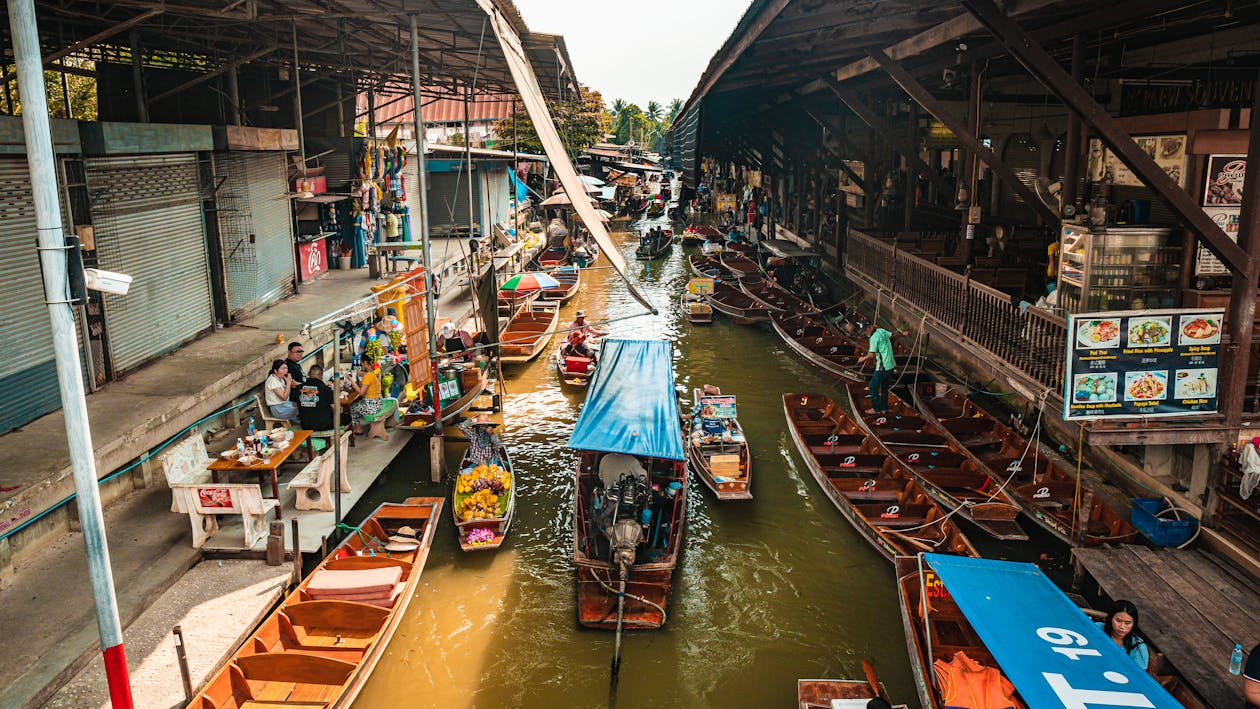
Thailand’s Damnoen Saduak is one of the most recognized floating markets in the world. Narrow canals fill with vendors selling fruit, cooked food, souvenirs, and drinks from wooden boats.
It is lively, photogenic, and often busy. For many travelers, it serves as an easy first introduction to floating market culture.
Going early can improve the experience, with cooler weather and lighter congestion before peak tour hours.
See Best Beach Towns That Aren’t Overcrowded for more relaxed travel ideas.
Amphawa, Thailand
Amphawa offers a different atmosphere from that of larger, tourist-focused markets. It is known for evening energy, waterfront dining, and a mix of local visitors and travelers.
Rather than just buying from boats, many people come for the broader canal-side experience, snacks, seafood, and strolling along the water.
This makes it a strong option for those who want culture with less of a checklist feel.
Cai Rang, Vietnam
Located in the Mekong Delta, Cai Rang is famous for large-scale boat trading and a more functional market feel. Vendors often display goods high on poles so buyers can see what is available from a distance.
The scale of river commerce here highlights how waterways remain central to life in the region.
Early morning is best, when activity is strongest, and temperatures are gentler.
Explore Coastal Road Trips With the Best Water Views for more water-shaped journeys.
Srinagar Floating Market, India
In Kashmir’s Srinagar region, the traditions of floating markets continue on Dal Lake. Produce sellers move through the water at dawn, creating a quieter and more atmospheric version of the concept.
The experience can feel less commercial and more tied to daily rhythm. Reflections, wooden boats, and mountain surroundings add beauty to the scene.
For many visitors, the mood is as memorable as the shopping itself.
Lok Baintan, Indonesia
Near Banjarmasin in Indonesia, the Lok Baintan floating market remains rooted in local exchange. Women in traditional hats sell produce and goods from small boats on the river.
It is one of those destinations where witnessing everyday traditions can be more meaningful than buying souvenirs.
Respectful observation matters, especially in markets that are still working spaces first.
Read Secret Island Destinations You’ve Never Heard Of for more unusual destinations.
Why Floating Markets Exist
Many formed where roads were limited, and rivers served as the easiest transport network. Boats allowed goods to move directly between producers, traders, and households.
Even as roads expanded, some markets remained because tradition, cultural tourism, and practicality kept them alive.
They are reminders that infrastructure depends on geography. In water-based communities, canals can matter as much as highways.
How to Visit Well
Arrive early whenever possible. Many floating markets are busiest and most authentic in the morning, before the midday heat or tour crowds arrive.
Carry cash where needed, travel light, and protect phones or cameras from splashes.
Most importantly, be patient. Water traffic moves at its own pace, and that is part of the charm.
What to Buy and What to Notice
Fresh fruit, local snacks, cooked dishes, flowers, and handmade items are common finds. Food is often the highlight because it connects directly to the place.
But do not focus only on transactions. Watch how boats maneuver, how sellers interact, and how the water shapes the entire rhythm of exchange.
Sometimes the most valuable takeaway is observation, not a purchase.
Floating markets offer more than shopping. They show what happens when communities build culture, trade, and daily life around water, creating experiences that feel both practical and unforgettable.
Check The Cleanest Water on Earth: Where Does It Come From? for more water-focused context.