The key to finding swimmable waterfalls is knowing where to go, what to expect, and how to respect the force of moving water.
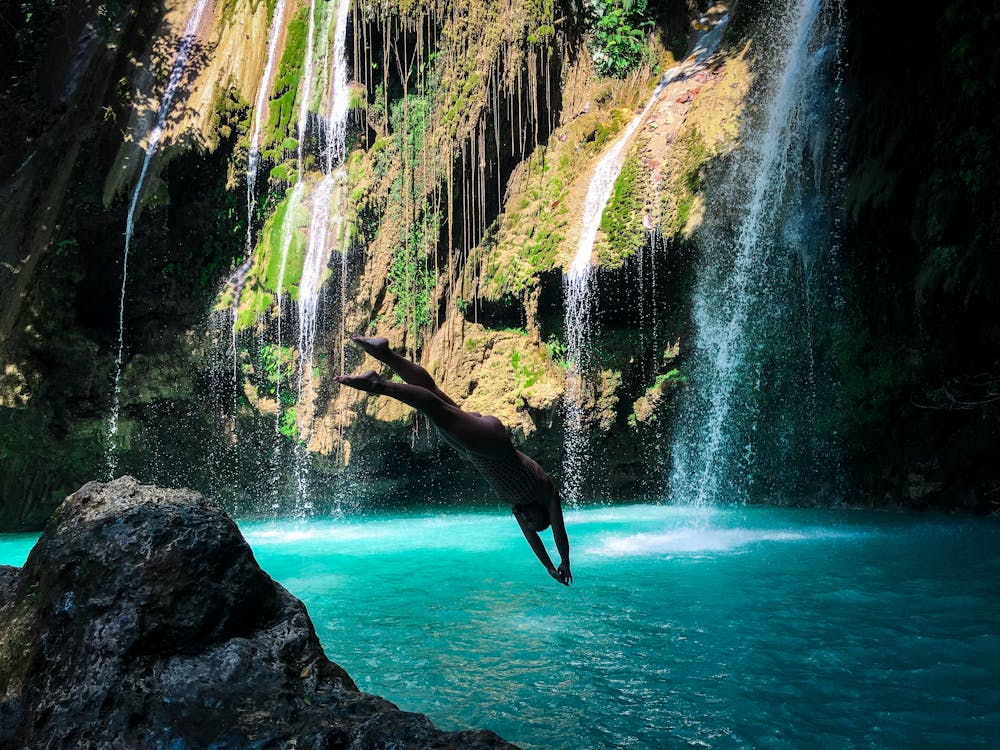
Few travel experiences feel as cinematic as swimming beneath a waterfall. The sound alone changes everything, turning an ordinary pool into a place that feels wild, powerful, and unforgettable.
While many waterfalls are dangerous or off-limits for swimming, others offer accessible plunge pools where visitors can safely cool off when conditions allow.
Kuang Si Falls, Laos
Kuang Si Falls is one of Southeast Asia’s most famous swimmable waterfall destinations. Cascading turquoise pools step down through jungle scenery, creating multiple places to wade or swim depending on current access rules.
The water color comes from mineral content and light reflection, giving the pools an almost painted appearance. Some sections are reserved for viewing only, while others are open for recreation.
Go early for cooler temperatures and lighter crowds. Popular natural wonders can feel very different before midday.
Explore The Clearest Waters You Can Swim In Around the World for more vivid swim spots.
Cummins Falls, Tennessee
Cummins Falls combines a scenic hike with a broad pool below a dramatic waterfall. The journey includes rocky terrain and stream crossings, which makes the final swim feel earned.
This is a favorite summer stop in the American South, but water levels and weather matter. Heavy rain can quickly change conditions in gorge systems.
Check permits or reservation requirements before visiting, and never ignore flash flood warnings.
Erawan Falls, Thailand
Thailand’s Erawan Falls features several tiers, each with pools of varying size and depth. Some are ideal for cooling off, while others are better for relaxing in shallow water surrounded by forest.
The appeal here is variety. You can explore different levels and choose a setting that matches your energy level.
Wear shoes with grip, because wet trails and polished rock surfaces can become slippery fast.
Read Hidden Swimming Holes Worth the Hike for more rewarding adventures.
Hamilton Pool Preserve, Texas
Hamilton Pool is not a classic vertical waterfall year-round, but when flow is active, water spills from a limestone overhang into a beautiful natural pool below. The setting feels like a hidden grotto near a major city.
Swimming access may change due to bacterial levels, conservation needs, or weather conditions. Even when water entry is restricted, the preserve remains worth the trip.
Reserve in advance whenever required. High-demand places often fill quickly.
Oheo Gulch Pools, Hawaii
The Oheo area in Maui, sometimes called the Seven Sacred Pools, is known for a series of pools and cascades connected by flowing water. Conditions determine whether swimming is allowed, and closures may be necessary for safety.
When open, the combination of tropical scenery and moving water is spectacular. Even when closed, it remains an excellent hiking and sightseeing destination.
Always respect closures. Fast water in volcanic landscapes can become dangerous with little warning.
See The Best Shoes for Water Activities before walking wet trails.
What Makes Waterfall Swimming Different
Unlike lakes or calm beaches, waterfalls create moving water, uneven footing, and shifting depth. Even a modest cascade can generate stronger currents than visitors expect.
Water temperature is often cooler as well, especially in mountain or spring-fed systems. That refreshing shock is part of the appeal, but it can catch unprepared swimmers off guard.
The sound and mist also reduce awareness. Stay visually connected to companions and keep track of entry and exit points.
Smart Safety Rules Before You Go
Never dive into waterfall pools unless local authorities explicitly designate them safe. Rocks, logs, and depth changes may be hidden below the surface.
Stay back from the direct impact zone if the flow is strong. Falling water carries a force that can push swimmers downward or disorient them.
Check the weather and upstream conditions before arrival, when possible. Many accidents occur after rainfall, as water levels can change unexpectedly.
Swimming under a waterfall can be one of travel’s great sensory experiences. Do it in the right place, at the right time, with the right respect, and it becomes the kind of memory people talk about for years.
Check The Science Behind Rip Currents for another water safety lesson.