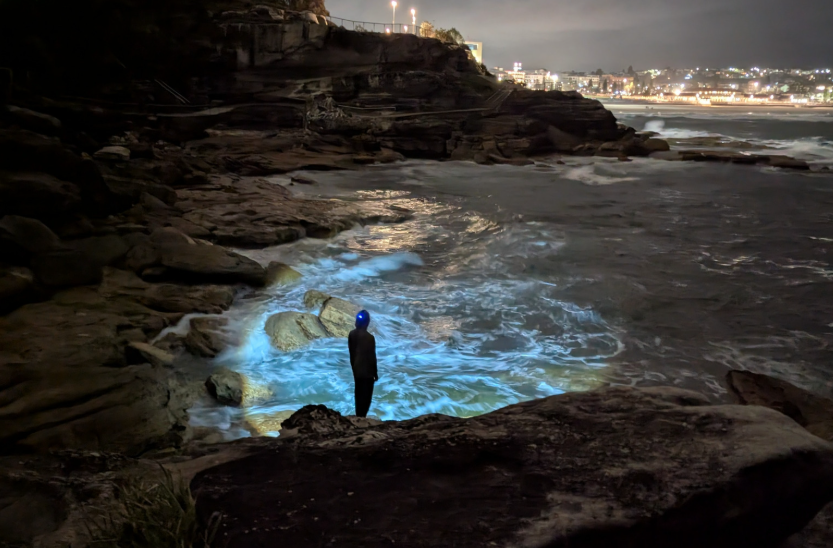
This phenomenon, in which water glows at night, is called bioluminescence, and it is one of the clearest examples of biology turning invisible processes into visible wonder.
Glowing water can seem supernatural, but the light comes from living organisms using chemistry. In oceans, bays, and some coastal waters, tiny creatures can produce flashes or trails of light when disturbed. Fish may leave glowing streaks, waves can sparkle at night, and a hand moved through the water may appear to paint with blue fire.
What Bioluminescence Is
Bioluminescence is light produced by living organisms through chemical reactions inside their bodies.
In many marine species, compounds called luciferins react with oxygen in the presence of enzymes, releasing energy as light rather than heat.
That makes bioluminescence highly efficient compared with many human-made light sources.
Read Bioluminescent Bays That Glow at Night for real places to see glowing water.
The Tiny Organisms Behind Glowing Water
The glowing water most travelers notice often comes from plankton called dinoflagellates. These microscopic organisms drift in the water and can exist in huge numbers.
When waves break, paddles move, or swimmers disturb the surface, the organisms flash briefly.
A single organism is tiny, but millions together can dramatically light up the water.
Why They Glow
Scientists believe bioluminescence serves several possible purposes depending on the species.
For some organisms, the flash may startle predators or draw attention to their location, increasing the chance that something larger will attack them.
In other species, light may help communication, camouflage, or attract prey or mates.
Why It Happens More in Some Places
Not all water glows because conditions must support the right organisms in sufficient numbers.
Sheltered bays, warm temperatures, nutrient balance, and calmer waters can help create strong concentrations. Weather and seasons also matter.
That is why a famous glowing bay may be brilliant one night and subtle another.
Why the Color Is Often Blue
Blue-green light travels efficiently through seawater, making it especially useful in marine environments.
Many bioluminescent organisms therefore emit light in that range. It is not the only possible color in nature, but it is common in the ocean.
That familiar electric blue glow is biology matched to the environment.
Explore Why Some Water Looks Blue and Other Water Looks Green for more color science.
Deep-Sea Bioluminescence
Near the surface, glowing waves capture attention. In the deep sea, bioluminescence may be even more important.
In permanent darkness, many fish, squid, jelly-like animals, and other creatures use light for survival.
Some lure prey, some hide their silhouette, and some communicate in ways humans are only beginning to understand.
See What Lives in the Deepest Parts of the Ocean for more deep-sea life context.
Why It Matters Scientifically
Bioluminescence helps researchers study ecosystems, behavior, and evolution. It also inspires medical tools and biotechnology research.
Nature often solves problems elegantly long before humans notice.
What looks magical can also become useful knowledge.
Check Why Some Lakes Explode (Yes, Really) for another strange science explainer.
How to Experience It Respectfully
If visiting glowing bays or beaches, follow local guidance and choose operators who prioritize conservation.
Avoid polluting products, respect wildlife, and accept that brightness varies naturally.
The goal is to witness a living system, not demand a guaranteed performance.
Bioluminescence occurs in water because organisms use chemical reactions to produce light for survival. For us, it becomes something rarer, a moment when science feels exactly like magic.