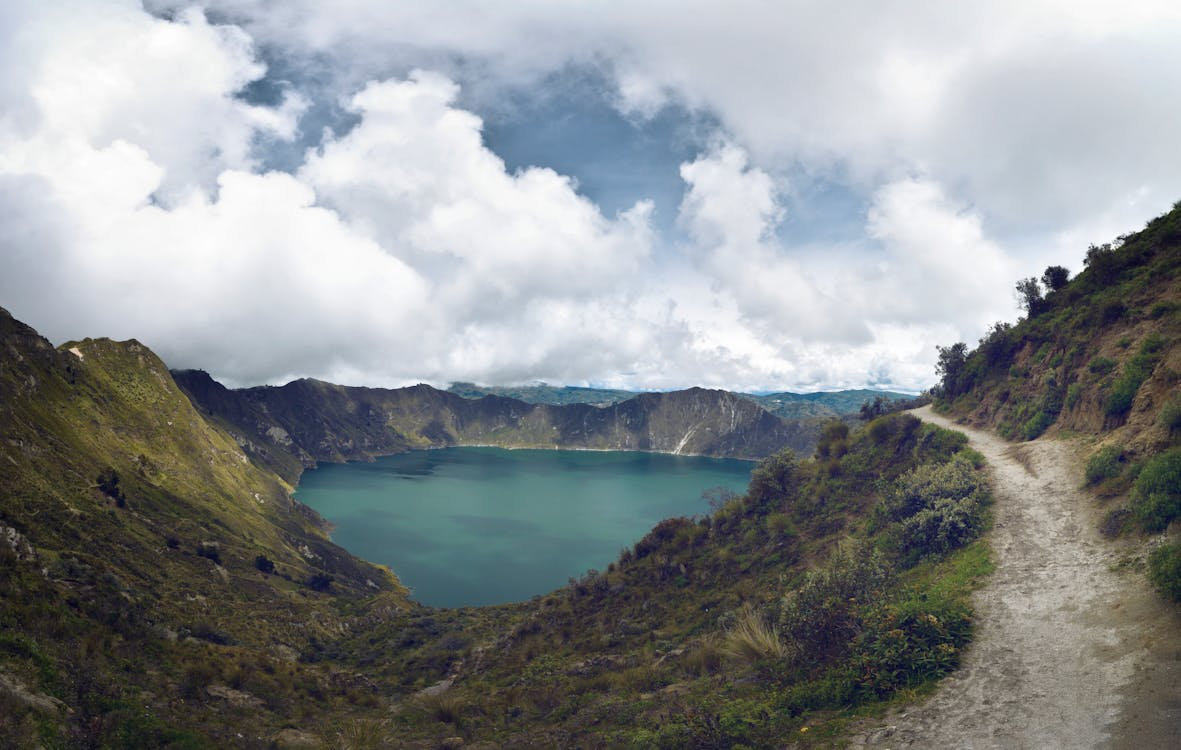
The phrase “exploding lake” sounds fictional, but rare natural events have caused lakes to suddenly release massive amounts of gas with deadly consequences.
These disasters are called limnic eruptions. They do not involve fireballs or a lake literally blowing apart like a bomb. Instead, dissolved gases trapped in deep water rapidly escape, forming an invisible cloud that can spread across nearby land. It is one of the strangest and least-known hazards in nature.
What Is a Limnic Eruption?
In certain deep lakes, gases such as carbon dioxide can accumulate in the bottom waters over long periods. The gas may come from volcanic activity beneath the lake or from nearby geological sources.
Because deep water is under pressure, large amounts of gas can stay dissolved there quietly for years.
If that stability is disturbed, the gas can suddenly come out of solution and rise rapidly.
Read The Real Reason Ice Floats for another surprising water science insight.
Why It Happens So Fast
Once gas begins to escape, it can trigger a chain reaction. Rising bubbles reduce the pressure in the surrounding water, allowing even more dissolved gas to escape.
That feedback loop can accelerate quickly, releasing huge volumes in a short time.
The result is not a fiery blast, but a powerful overturning of the lake and a spreading gas cloud.
Why Carbon Dioxide Is So Dangerous
Carbon dioxide is colorless and odorless at dangerous concentrations. It can displace breathable air near the ground.
Because it is denser than normal air, it may flow downhill into valleys or low areas.
People and animals can lose consciousness without understanding what is happening.
Explore Why Water Pressure Can Crush You for more hidden water hazards.
Lake Nyos, Cameroon
The most famous limnic eruption occurred at Lake Nyos in Cameroon in 1986. A massive release of carbon dioxide caused widespread loss of life in nearby communities.
The event brought global attention to a hazard many people had never heard of before.
It also led to major scientific studies and risk-reduction efforts.
Other Lakes at Risk
Lake Monoun in Cameroon experienced a deadly gas release earlier in the 1980s. Other deep volcanic lakes around the world are studied for similar conditions.
Not every deep lake is dangerous. Specific geology, gas sources, depth, and water layering all matter.
This is a rare hazard, not a common fear, that, and it does not apply to ordinary lakes.
Check What Lives in the Deepest Parts of the Ocean for more extreme water ecosystems.
How Scientists Reduce the Risk
One major strategy uses degassing pipes. These systems draw deep gas-rich water upward in a controlled way, allowing carbon dioxide to escape gradually rather than catastrophically.
Monitoring also helps researchers track lake conditions over time.
Science cannot remove every risk, but it can greatly reduce danger when hazards are understood.
Why Most Lakes Never Do This
The vast majority of lakes do not sit above gas-rich volcanic systems or maintain the right deep-water conditions for large dissolved gas buildup.
Many lakes mix naturally through seasonal changes, wind, and temperature variations, preventing dangerous accumulation.
That is why everyday lake recreation does not involve concern about exploding water.
See Lakes That Feel Like Oceans for a calmer look at unusual lakes.
Why This Story Matters
Limnic eruptions are a reminder that not all natural hazards are obvious. Some of the most serious threats are invisible and poorly known until studied.
They also show how geology, chemistry, and water systems can interact in surprising ways.
Nature often holds processes stranger than fiction.
Some lakes “explode” when trapped gas is suddenly released in a limnic eruption. It is rare, highly specific, and scientifically fascinating, a hidden hazard that proves calm surfaces do not always reveal what lies below.