Learning how water pressure works explains why water can feel gentle at the surface but become one of nature’s most powerful forces with depth.
Divers, submarines, marine animals, and deep-sea explorers all face the same reality: pressure increases rapidly underwater. At shallow recreational depths, this can be manageable with training and equipment.
Far deeper down, the force becomes extreme enough to damage the body, collapse structures, and destroy anything not built to withstand it. Water pressure is invisible, but it is relentless.
Why Pressure Increases With Depth
Pressure underwater comes from the weight of the water above you. The deeper you go, the taller that column of water becomes.
That means every additional descent adds more force pressing from all directions. Unlike standing under a heavy object, water pressure surrounds you.
This is why depth matters so much in oceans, lakes, and even deep pools.
Read Why Some Lakes Explode (Yes, Really) for another hidden water hazard.
What It Does to the Human Body
The body is mostly water, so solid tissues are not “crushed” easily at modest depths. The bigger issue is air spaces.
Ears, sinuses, lungs, and any trapped gas respond strongly to changes in pressure. Without equalization or proper technique, pain and injury can happen quickly.
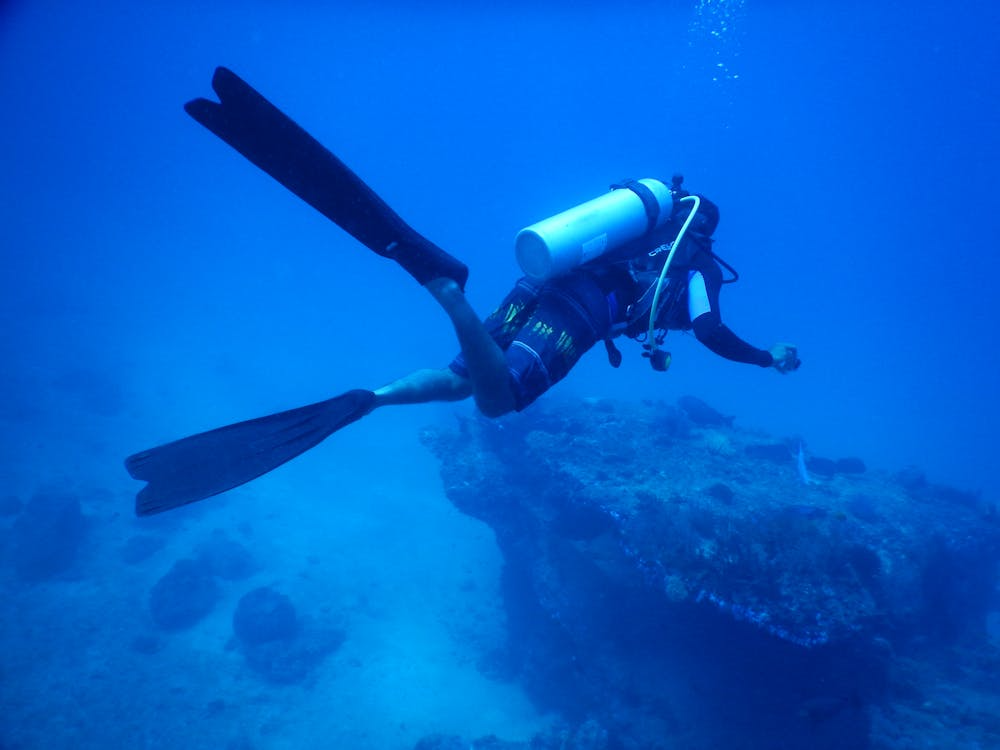
That is why scuba diving training emphasizes breathing rules and pressure awareness from the start.
Why Ears Hurt First
Many swimmers and divers notice ear discomfort during descent. Pressure outside the eardrum rises while pressure inside the middle ear lags.
Equalizing, gently opening the pathways that balance pressure, helps solve this mismatch.
Ignoring pain can lead to injury, which is why descending slowly matters.
Deep Diving Becomes Different
At greater depths, gases behave differently under pressure. Nitrogen absorption increases, oxygen management changes, and decision-making can be affected in specialized diving contexts.
This is far beyond casual swimming and requires advanced training, planning, and equipment.
Depth is not just “more of the same.” It changes the entire environment.
Explore What Lives in the Deepest Parts of the Ocean for more deep-sea context.
Why Submarines Need Strong Hulls
Machines face the same laws. A submarine or research vessel must resist massive external force while maintaining a safe internal pressure.
The deeper the mission, the stronger and more specialized the structure must be. Materials, shape, and engineering become matters of survival.
Even tiny design flaws can become catastrophic under extreme pressure.
Why Deep-Sea Animals Are Fine
Creatures living in the deep ocean are adapted to those conditions. Their bodies are built to function under pressures that would destroy unprotected human systems.
Many lack large air-filled spaces, and their chemistry is tuned for the environment.
They are not defying physics; they are evolved for it.
See Why Bioluminescence Happens in Water for another deep-ocean adaptation.
Pressure Changes on the Way Up Too
Ascending can be dangerous as well. Expanding gas must be managed properly during diving.
That is why controlled ascent rates and safety procedures exist. Going up carelessly can be as risky as going down too fast.
Pressure safety is about change, not only maximum depth.
What This Means for Everyday Swimmers
Most people at beaches or pools will never face the crushing forces of deep water. But understanding pressure explains ear pain during dives, why deep-sea exploration is hard, and why the ocean becomes more hostile with depth.
It also builds respect for environments that look calm from the surface.
Invisible forces often shape reality more than visible ones.
Water pressure can crush you because depth turns ordinary water into an extraordinary force. The deeper you go, the more the ocean reminds you that simple substances can become immense powers under the right conditions.
Learn The Science Behind Rip Currents for practical beach safety science.