The reason ice floats comes down to molecular structure, spacing, and one of nature’s most important quirks.
Most solids sink when placed in their own liquid. Frozen metal would sink in molten metal, and most substances become denser when they solidify. Water is one of the unusual exceptions.
Ice floats on liquid water, and that simple fact shapes lakes, oceans, weather, and life itself. Without it, many aquatic ecosystems would freeze from the bottom up.
Density Decides Floating
Whether something floats depends largely on its density, which is how much mass it contains per unit volume.
If an object is less dense than the liquid around it, buoyancy can keep it at the surface. If it is denser, it sinks.
So the key question is not “why is ice light,” but “why is solid water less dense than liquid water?”
Read Why You Float Better in Salt Water for another simple density example.
Water Molecules Behave Differently
Water molecules are polar, meaning they have slight electrical differences across the molecule. This allows them to attract one another through hydrogen bonding.
In liquid water, molecules move constantly and can pack relatively close together while bonds form and break dynamically.
When water freezes, its molecules lock into a more ordered crystal structure.
Freezing Creates More Space
The crystal structure of ice holds molecules farther apart than they are in liquid water. That extra spacing increases volume without adding mass.
Same substance, same amount of matter, more space taken up.
Because the mass is more evenly distributed, the density drops, and the ice floats.
Check Why Water Pressure Can Crush You for more on extreme water conditions.
Why Ice Expands
Many people notice frozen pipes bursting or ice trays rising slightly. That happens because water expands as it freezes.
This expansion is a direct result of the open crystal lattice structure created during freezing.
It is one of the easiest everyday clues that frozen water behaves differently from most solids.
Why This Matters in Nature
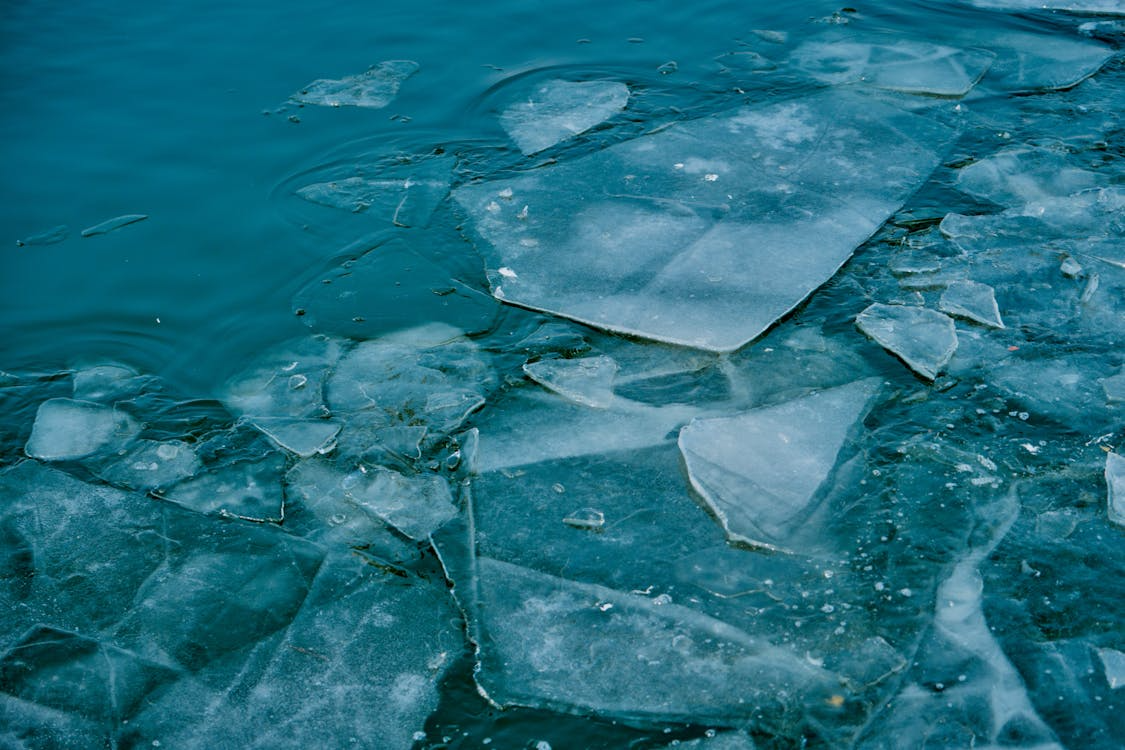
When lakes freeze, surface ice forms first and floats. That creates an insulating layer above the liquid water below.
Fish and other organisms can survive beneath the ice during winter because the lake rarely freezes solid.
If ice sank, new ice would keep forming at ever-deeper depths, dramatically changing life in cold climates.
Learn Why Some Lakes Explode (Yes, Really) for another surprising science explainer.
Oceans Benefit Too
Sea ice influences climate by reflecting sunlight and altering ocean circulation. Floating ice also creates habitat for many species.
While melting sea ice has complex climate implications, the basic fact that it floats remains globally important.
A small molecular property scales up into planetary effects.
See The Science Behind Rip Currents for another ocean science explainer.
A Rare and Powerful Exception
Water’s behavior near freezing is scientifically unusual. The water density reaches its maximum above its freezing point, then becomes less dense as it forms ice.
That anomaly makes water different from many familiar materials.
Nature often depends on exceptions as much as rules.
A Lesson Hidden in Plain Sight
A cube in a drink or frost on a pond can seem ordinary, yet both reflect deep chemistry and physics.
You do not need a laboratory to observe one of Earth’s most consequential molecular behaviors.
Sometimes the biggest scientific stories hide in common experiences.
The real reason ice floats is that freezing rearranges water molecules into a structure with more space and lower density. That tiny molecular shift helps preserve ecosystems, shape the climate, and make winter on Earth as we know it possible.